 A preventive HVAC maintenance job in Ladson, SC, was completed across two service visits on August 17 and August 31, 2026. Arctic Air Inc. worked on three HVAC units, with a mini-split system also listed in the maintenance scope. Our work focused on inspecting, cleaning, testing, and recording the condition of the equipment.
A Preventive Maintenance Inspection Completed Across Two Visits
On August 17, we performed the initial preventive maintenance inspection and documented the items that still needed follow-up.
We returned on August 31 and completed the documented air-handler inspection and cleaning work. We also checked the equipment while it was operating in cooling mode. This follow-up allowed us to address the maintenance tasks identified during the first inspection and finish the remaining system checks.
What the Preventive HVAC Maintenance Checklist Covered
The maintenance checklist covered several key areas of the HVAC system, as detailed below:
Airflow, Coils, and Condensate
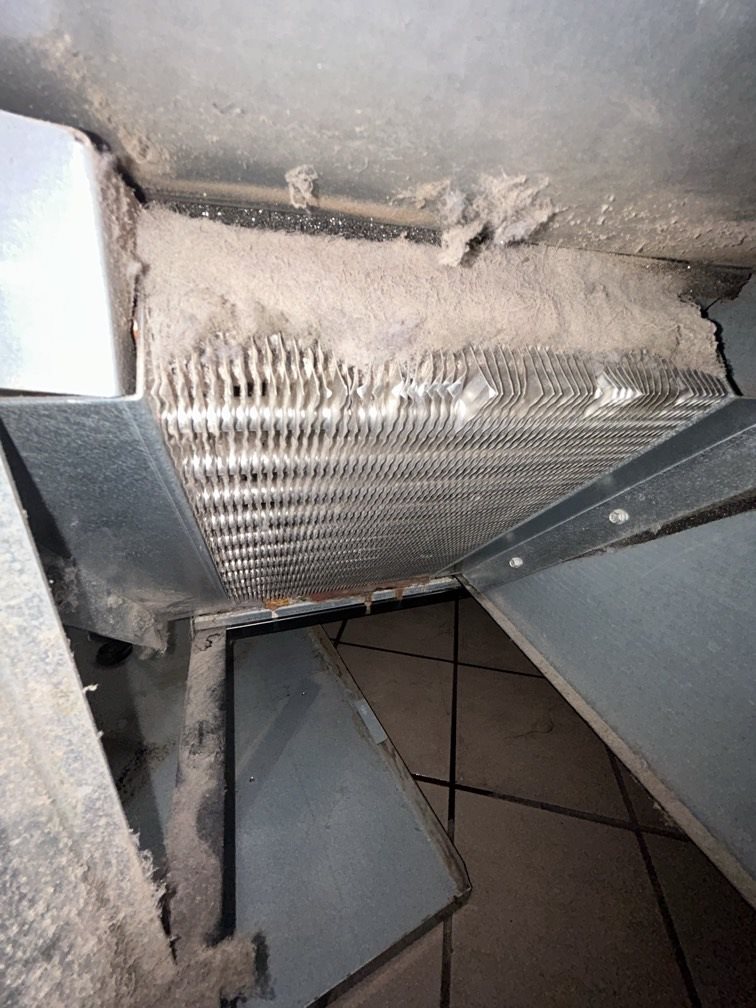
We checked proper airflow and inspected and cleaned the condenser and evaporator coils. Permanent filters were washed, and the condensate drain lines were cleared and treated. Drainage was also checked as part of the maintenance process.
Electrical Components and Safety Controls
Our electrical checks included inspecting connections for tightness and safety, testing voltage at the contactor, and checking the contactor for pitting. We tested motor amperage draw and evaluated the capacitors for proper operation and signs of weakness.
The safety controls were also checked and recorded as functioning properly.
Refrigerant and Cooling Operation
We gauged refrigerant pressures and compared them with specifications, then inspected the metering device for proper operation. The equipment was tested in cooling mode, and thermostat accuracy and operation were checked.
Before finishing, we secured the equipment panels and returned the thermostat to the customer’s preferred settings.
Normal Operating Checks With One Maintenance Item Still Recommended
During the August 31 visit, the systems were operated in cooling mode, and the unit pressures were reported as normal. The safety controls were also functioning properly.
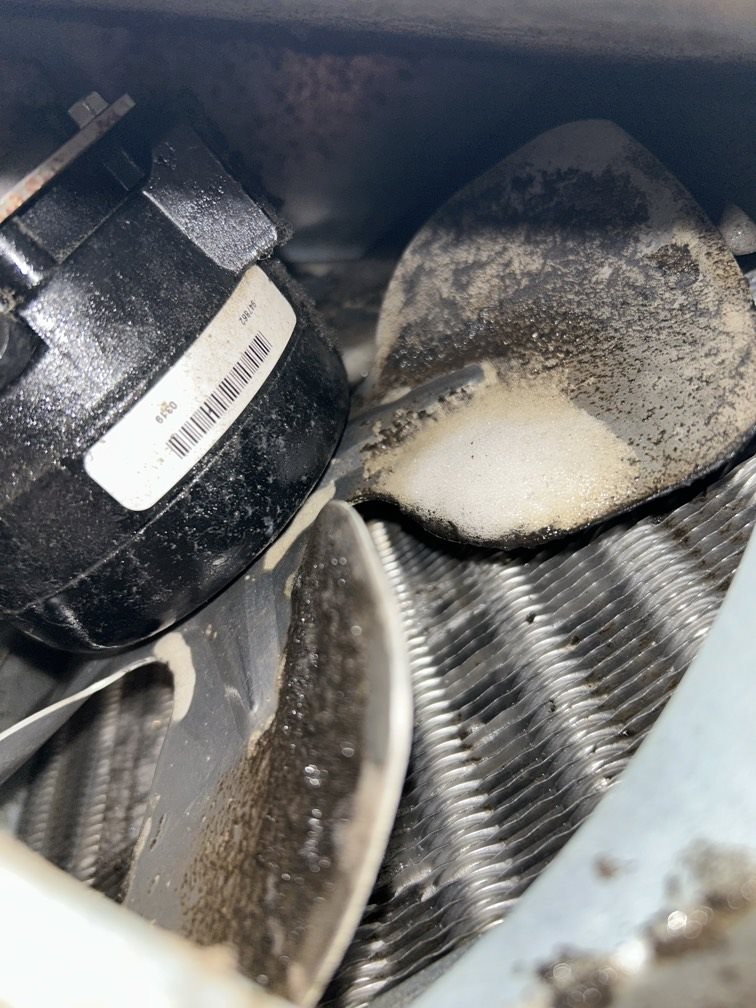
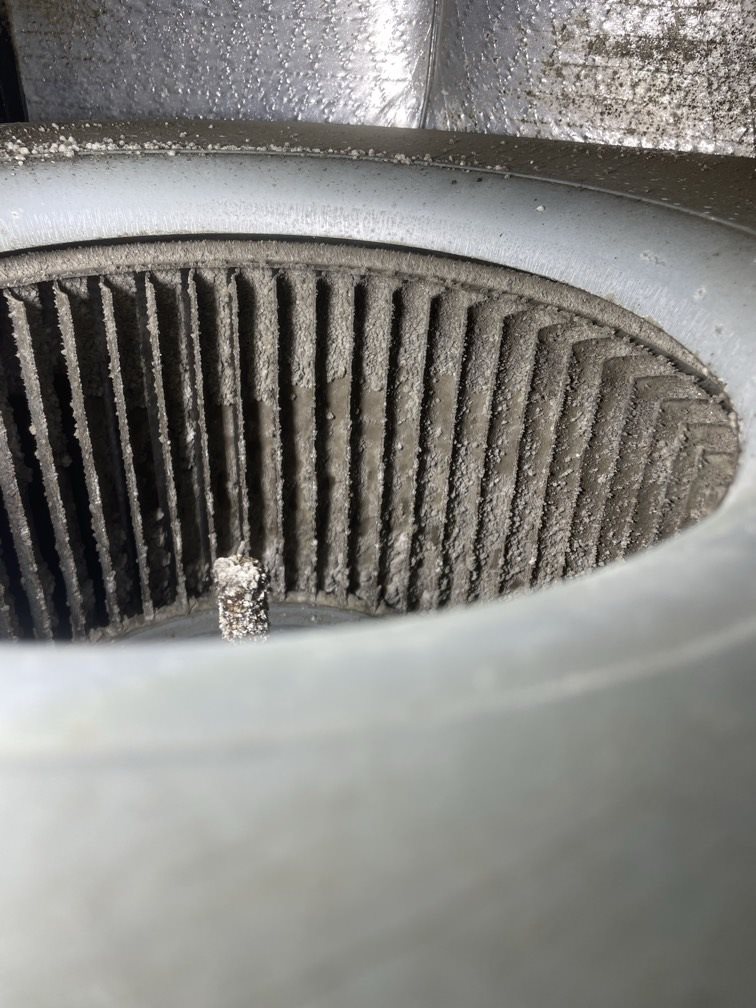
The blower assemblies were the remaining maintenance item identified during the inspection. They were recorded as needing cleaning, and our technician recommended removing and cleaning the blower wheels on all three air handlers.
Keeping blower components clean helps support proper system airflow, so this remained a recommended next maintenance step after the August 31 visit.
The customer was satisfied with the completed maintenance work.
Arctic Air Inc. has served the Lowcountry since 1993 and provides preventive HVAC maintenance in Ladson and surrounding communities. If you want your HVAC equipment inspected, cleaned, tested, and documented, contact us to schedule preventive maintenance service.
A walk-in cooler sitting at 52°F can put a commercial operation in a difficult spot fast. When this Goose Creek, SC client reached out to us, their cooler was reading 52°F and not working properly. Our crew at Arctic Air Inc. arrived on June 8, 2026, checked the equipment, and started with the conditions in front of us.
The first visit showed that the system was low on refrigerant.
We added 4 pounds of R404A refrigerant to clear the sight glass and bring operating pressures as close to normal as possible. That helped us stabilize the system, but the inspection also revealed signs that pointed to a much larger equipment problem.
A 52°F Reading Pointed to Bigger Problems
We found the suction line accumulator heavily rusted and likely leaking. The evaporator was also in poor condition, and we found refrigerant oil in the condensate. With an older cooler showing several signs of deterioration, we recommended replacement rather than treating the refrigerant loss as an isolated issue.
Our client approved the quote, giving us a clear path to remove the aging equipment and install a new refrigeration system.
“We traced a 52°F walk-in cooler in Goose Creek to low refrigerant, severe component wear, and equipment that had reached the point of replacement.”
Installing the New Refrigeration Equipment
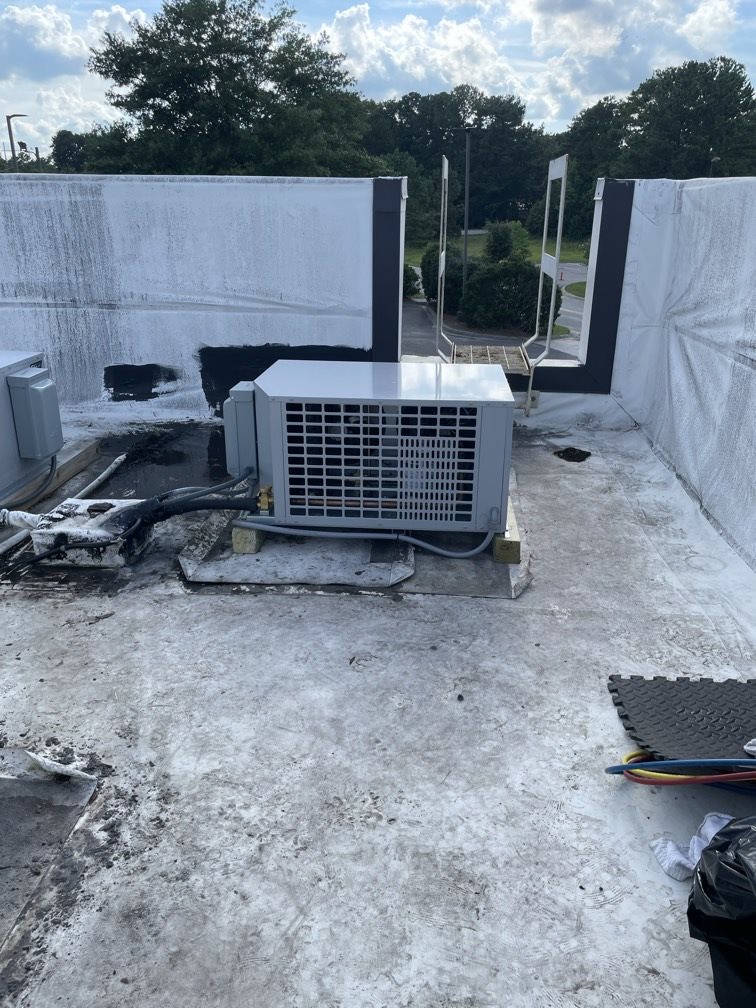
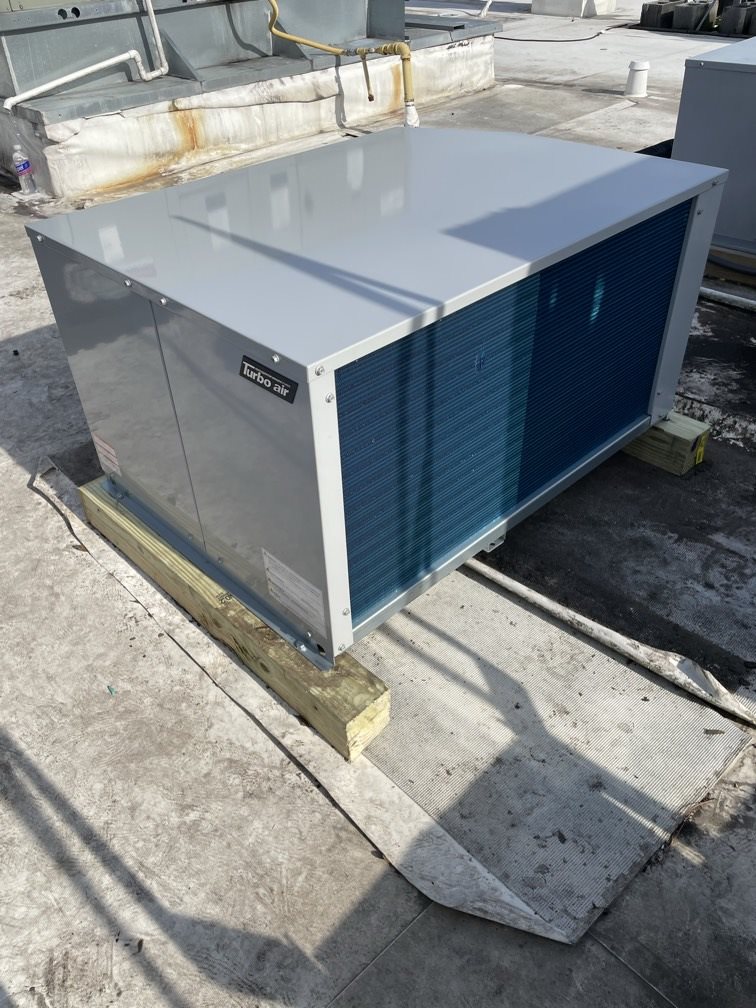
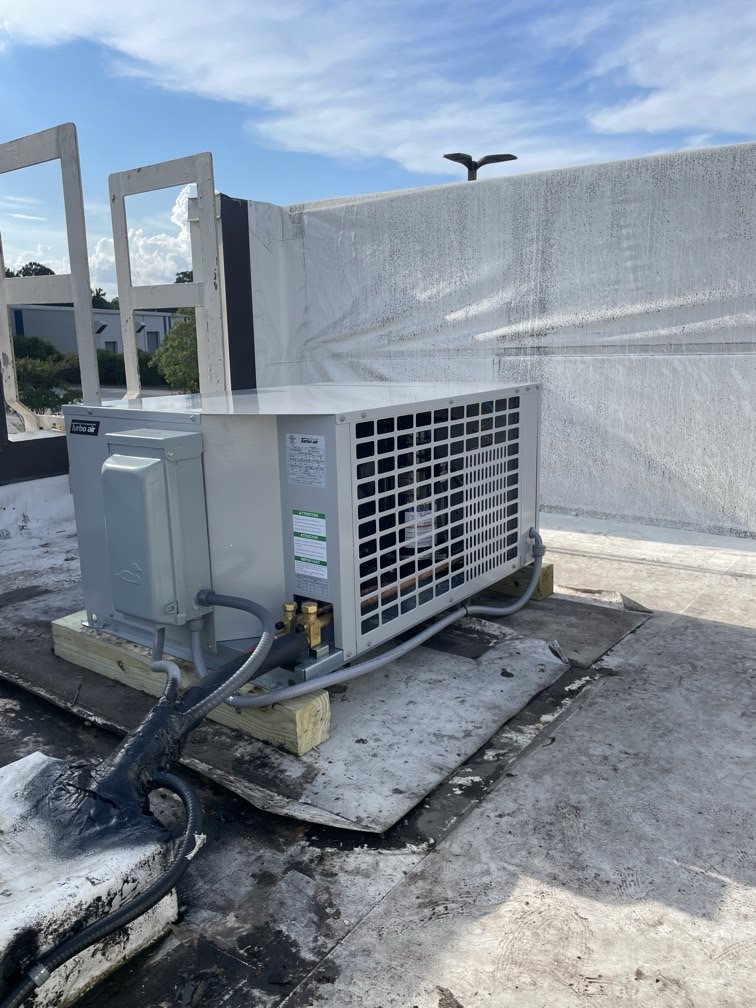
We returned on August 4, 2026, disconnected the existing system, and removed the old equipment from the premises. We mounted the new evaporator to the cooler ceiling with carriage bolts, nuts, and washers. For the outdoor condensing unit, we used a crane to position it on new pressure-treated lumber and secured it in place.
From there, we ran a new soft copper line set and insulated the suction line. We installed a new outdoor disconnect, completed the wiring connections, added a new PVC drain line at the evaporator, and completed the soldered connections inside and outside.
Because this system included roof and cooler penetrations, sealing was part of the installation. We used foam at the cooler penetrations and sealed the roof penetration with foam, silicone, and rubberized roof sealant.
Testing Before Calling the Job Complete
We pressure tested the system to 350 psi with nitrogen and checked the soldered connections with soap bubbles. No leaks were found. We then evacuated the system below 250 microns before weighing in the listed refrigerant charge.
Once the system was running, we added the refrigerant needed for the line-set length and set the expansion valve as needed. The walk-in cooler reached 35°F and cycled off normally.
“This Goose Creek project finished with a new refrigeration system tested for leaks, evacuated below 250 microns, and cycling normally at 35°F.”
The customer was satisfied with the completed work. For us, that final temperature reading mattered because it confirmed that the replacement system was operating normally after installation and testing.
Commercial refrigeration is one of the services we provide to Goose Creek businesses and other Lowcountry customers.
Schedule Walk-In Cooler Service in Goose Creek, SC
If your Goose Creek walk-in cooler is running warm, losing refrigerant, or showing signs of aging equipment, call to schedule a commercial refrigeration service visit. We can inspect the system, identify the condition of the major components, and recommend the next step based on what we find.
Acting before temperatures keep climbing can help you get a clear repair or replacement plan in place sooner.
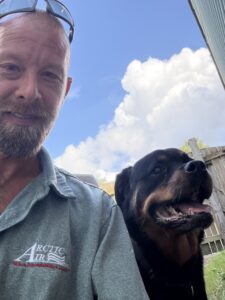 A new HVAC installation usually comes with a checklist: remove the old equipment, set the new system, make the connections, test every component, and leave the homeowner with reliable heating and cooling. On this Summerville, SC project, we had one extra item on the list: earn approval from the homeowner’s dog.
Our technician, Chris, quickly picked up a four-legged “assistant” who stayed interested in the work while our team replaced the home’s existing 2-ton HVAC equipment. The homeowner had contacted our Arctic Air Inc. office for help, and we came prepared to handle the removal, installation, safety upgrades, and final system verification from start to finish.
Removing the Old System and Setting the New Equipment
We began by recovering the refrigerant in accordance with EPA guidelines. From there, we removed the existing 2-ton equipment and disposed of it properly.
The replacement included a new Ruud 2-ton outdoor condenser and a matching Ruud indoor air handler. Once the major equipment was in place, we connected the refrigerant lines, electrical components, and condensate drain system. Every connection needed to support safe, dependable operation, so our work continued well beyond setting the units in position.
Of course, Chris had supervision. The homeowner’s dog had taken a liking to him and seemed ready to join our crew for the day.
“This Summerville HVAC replacement came with a new Ruud system and one very dedicated four-legged supervisor.”
Building Safety and Protection Into the Installation
A complete replacement also gave us the opportunity to install several supporting components. We added two HVAC surge protectors, a new programmable thermostat, two water safety switches, and a secondary condensate drain pan.
Outside, we installed a new electrical disconnect, electrical whip, condenser equipment pad, and hurricane strapping for the outdoor unit. Inside, we added the air handler support system needed for the new equipment.
These details matter because an HVAC system depends on more than the condenser and air handler. Electrical protection, drainage safeguards, stable support, and secure mounting all contribute to the finished installation.
“For this Summerville home, we paired the new 2-ton Ruud equipment with the electrical, drainage, and safety upgrades needed for a complete installation.”
Testing the New HVAC System Before We Wrapped Up
After installation, we moved into startup and verification. We checked the refrigerant charge and airflow, tested heating and cooling operation, confirmed the programmable thermostat was functioning, and inspected the electrical and safety devices.
We also verified proper condensate drainage and tested the safety switches. Finally, we started and tested the system to confirm it was operating correctly and meeting manufacturer specifications.
The homeowner was very pleased with the new system and shared positive feedback on Chris and his work. We were glad to deliver a finished installation that met the homeowner’s needs, with a little extra help from the jobsite’s most enthusiastic supervisor.
Need a New HVAC System in Summerville, SC?
If your current equipment is ready for replacement, our team can help you plan the next step.
Request a service or schedule an HVAC visit in Summerville, SC so we can evaluate your home, discuss replacement options, and help you move toward dependable heating and cooling with the right supporting safety components in place.
A walk-in cooler can be cooling properly and still need attention in places that are easy to overlook. That was the case during a routine annual maintenance visit in Walterboro, SC. The client contacted our office to schedule service, and our Arctic Air Inc. technician worked through a full preventive maintenance inspection of the remote condensing unit and the indoor cooler components.
Most of the system checked out well.
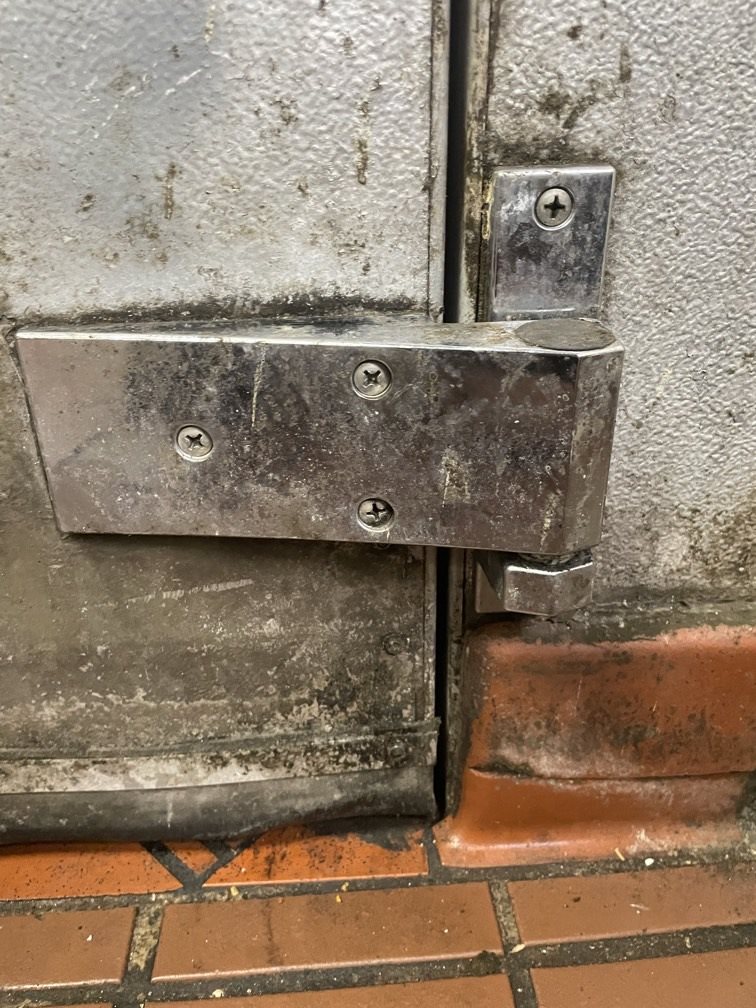
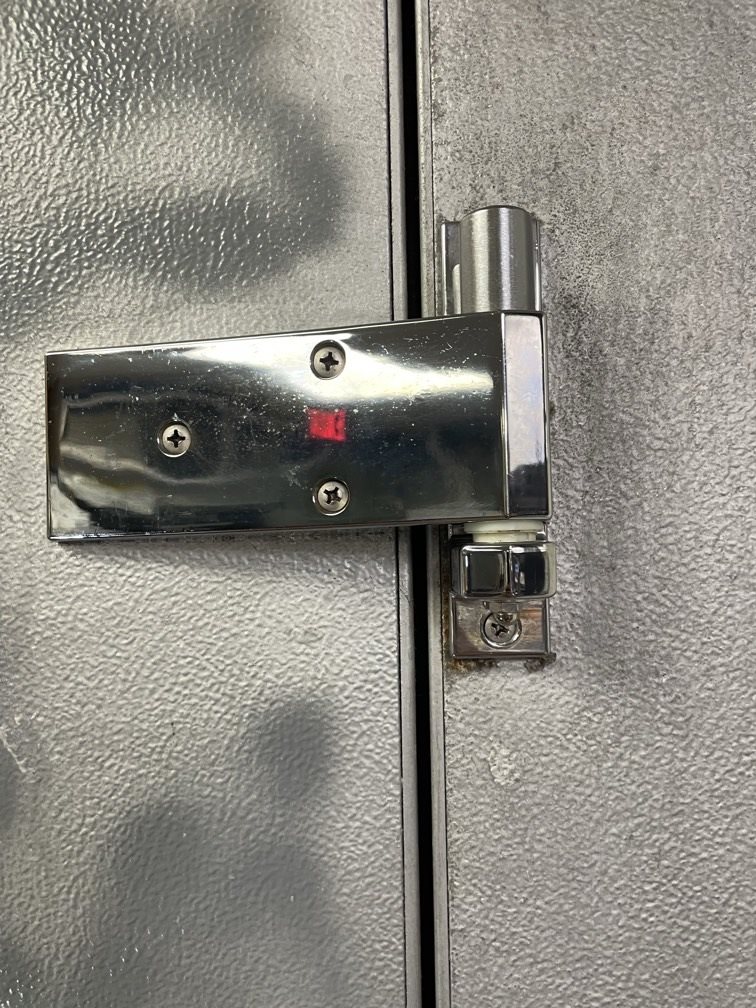
The annual visit also uncovered two door-related items that needed follow-up: the bottom sweep gasket needed replacement, and the hinges needed spring cartridges so the door would close on its own every time.
That is exactly the kind of detail routine maintenance can bring to the surface.
Our commercial refrigeration work includes preventive maintenance and service for walk-in coolers and similar equipment.
Working Through the Annual Maintenance Plan
We use the maintenance visit to look at the refrigeration system as a complete operating setup, not a single component. On this Walterboro job, our checks included:
- Remote condensing unit: We checked the weather panels and hoods, refrigeration sight glasses, refrigerant charge, crankcase heaters, operating and safety controls, refrigerant lines, and fan motors. Each item checked OK. We also cleaned the condenser coils and noted the unit’s general condition as good.
- Indoor components: We cleaned the evaporator coils and evaporator fans, checked the operating and safety controls, and cleared the condensate drains and pans. The controls checked OK. Defrost heaters and controls were not applicable on this unit, and anti-sweat heaters were also not applicable.
- Door components: We inspected the gaskets, latches, hinges, and hardware. That portion of the inspection led us to the worn bottom sweep gasket and the hinge issue that required spring cartridges.
The maintenance record also documented the coil cleaning material used during the visit. Keeping those details with the service record gives our team a clear picture of what was checked, cleaned, and flagged for repair.
Returning to Correct the Door Issues
We returned to the Walterboro, SC job on August 7, 2026, to complete the quoted follow-up work. We removed the walk-in cooler door hinges and took out the original cams. In their place, we installed new spring cartridges and adjusted the spring tension.
After securing the hinges back to the door, we tested their operation. The hinges were working well and closing the door completely.
Next, we removed the old bottom sweep gasket. We installed the new sweep gasket with new screws, then tested the door again. It continued to close on its own as intended. With both repairs complete and the door operation confirmed, the job was finished.
Keep Your Walterboro Walk-In Cooler on a Maintenance Schedule
The customer was satisfied with the completed work, and the project showed the value of checking the full refrigeration system along with the door and hardware.
If your Walterboro business depends on a walk-in cooler, schedule preventive maintenance with Arctic Air Inc. so we can inspect, clean, test, and document the equipment, then identify repair needs before they become larger service concerns.
Request a service visit for your Walterboro, SC property and keep your annual maintenance schedule moving.
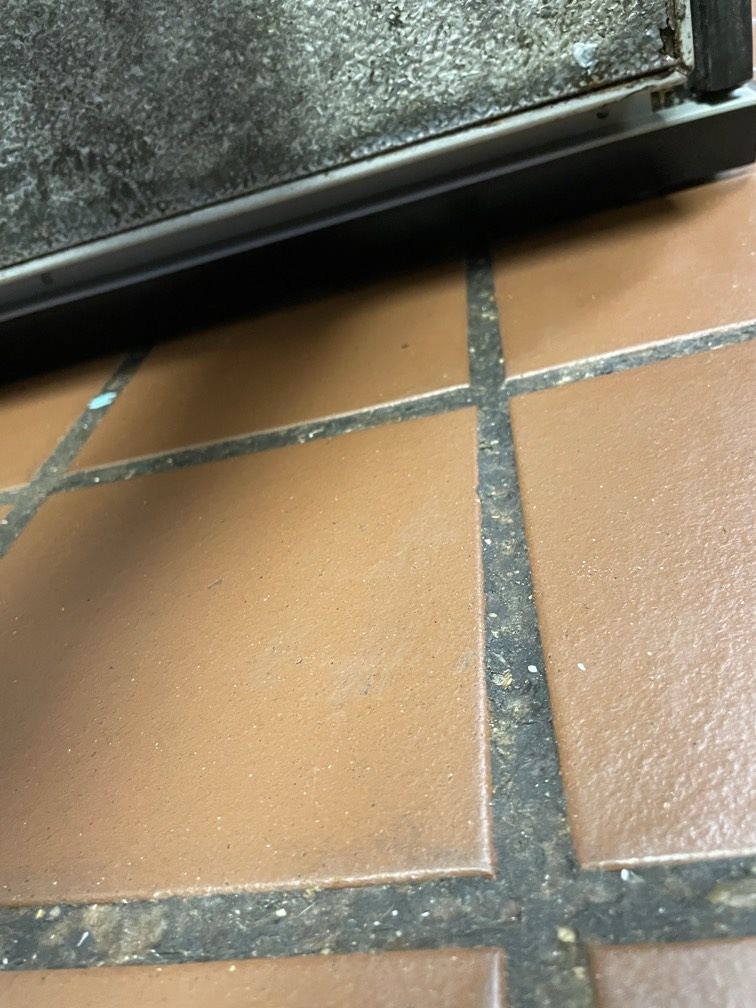
Water on the floor beside a desk is never a welcome sight, especially when the source is tied to commercial refrigeration. On July 10, 2026, our team at Arctic Air Inc. arrived at a Charleston, SC store after the customer contacted our office to report a walk-in freezer leaking into the office area.
The immediate concern was clear.
Water had reached the back of the store and collected near the desk. Our goal was to locate the source, make a secure repair, and confirm that no second leak was adding to the problem.
Following the Water Back to the Drain Line
We checked in onsite and began tracing the leak from the wet floor toward the walk-in freezer. The issue was not inside the office itself. Outside the freezer box, we found that the freezer drain line had disconnected from the PVC drain line shared by the walk-in units.
That loose connection gave drainage water a path onto the floor instead of carrying it through the intended piping. Once we identified the separation, the repair became focused and direct.
We secured the drain pipe connection with PVC cement.
This restored the connection between the freezer drain line and the shared PVC drainage system. Rather than replacing unrelated parts or expanding the repair beyond the confirmed source, we corrected the failed connection that was causing the water intrusion.
Cleaning the Area and Checking for More Leaks
Repairing the pipe was one part of the visit. We also cleaned the water from the floor so we could inspect the area under clearer conditions. Removing the standing water made it easier for us to watch for fresh moisture and determine if another source was present.
We found no additional areas leaking. By the time we departed, the floor was mostly dry, the drain connection was secured, and the repair was complete.
That final check mattered.
In a Charleston store, water near a desk or back-office work area can interfere with daily tasks and create an ongoing cleanup problem. Confirming that the visible leak had stopped gave the customer a clear result rather than an uncertain temporary fix.
A Straightforward Commercial Refrigeration Repair in Charleston
This project shows why a leaking walk-in freezer deserves a prompt inspection. The equipment may still be holding temperature while a disconnected drain line sends water somewhere it should not go. In this case, the customer noticed the leak in the office and contacted us before the situation spread further across the back of the store.
Our commercial refrigeration work includes diagnosing problems around walk-in freezers and the supporting components that keep them operating properly. For this Charleston service call, the solution came from following the evidence, securing the failed PVC connection, and checking the area after cleanup.
The customer was satisfied with the work performed, and we left with the job complete.
Schedule Walk-In Freezer Leak Repair in Charleston, SC
If water is appearing near your walk-in freezer, office, storage area, or shared drain piping, contact us to schedule a commercial refrigeration service visit in Charleston, SC.
Request an inspection now so our team can locate the source, complete the needed repair, and help keep a small leak from becoming a larger disruption for your business.
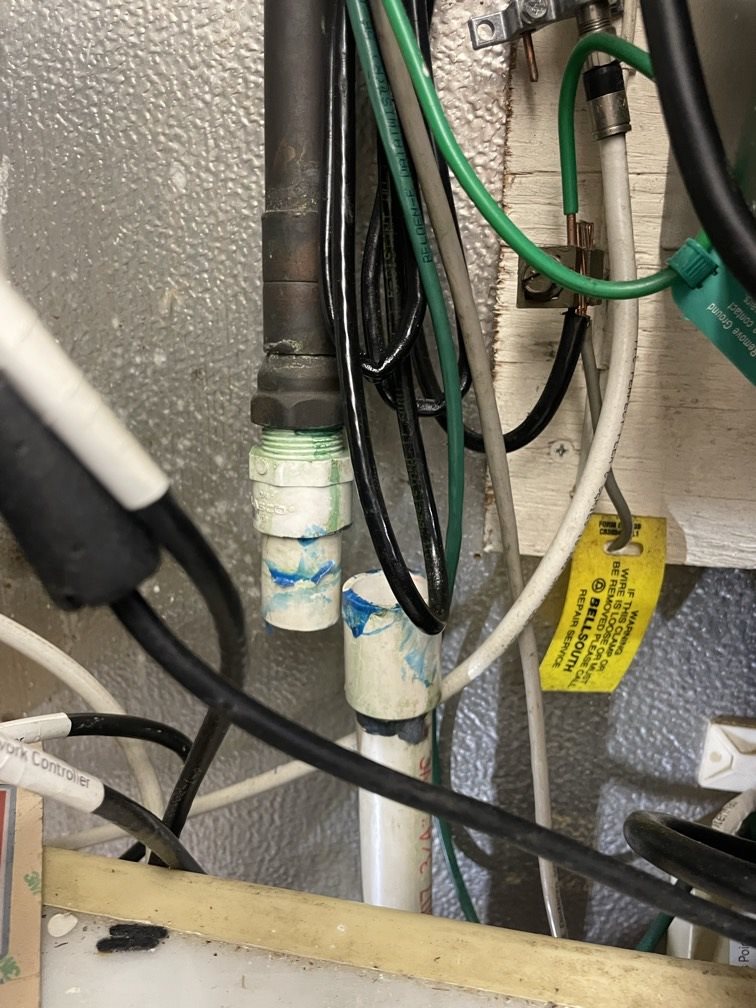
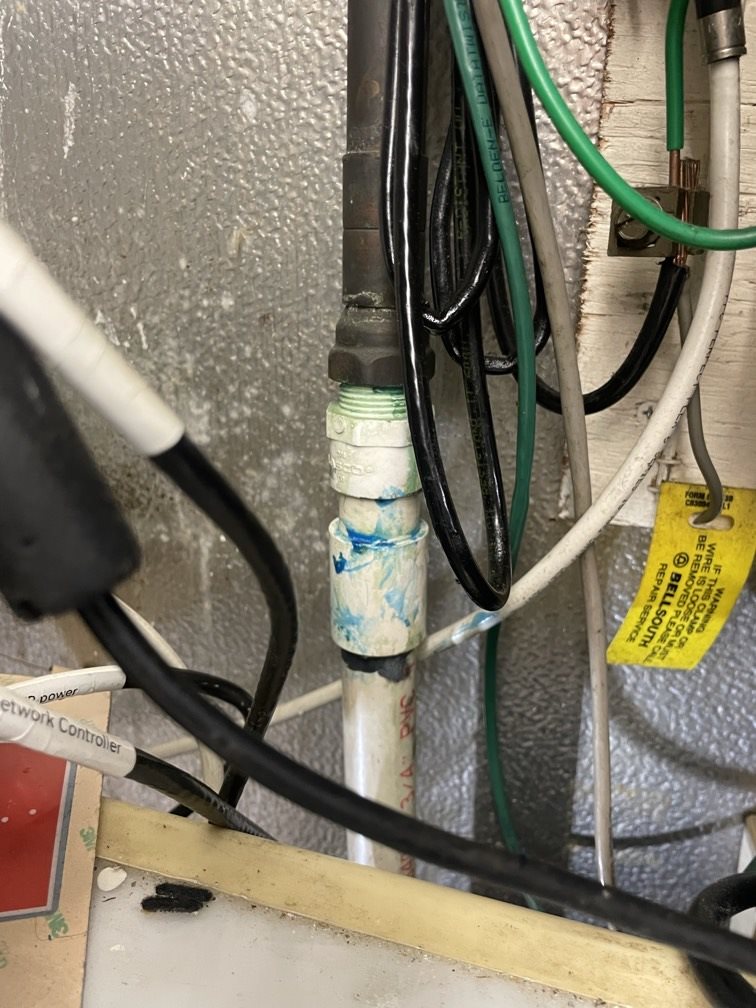
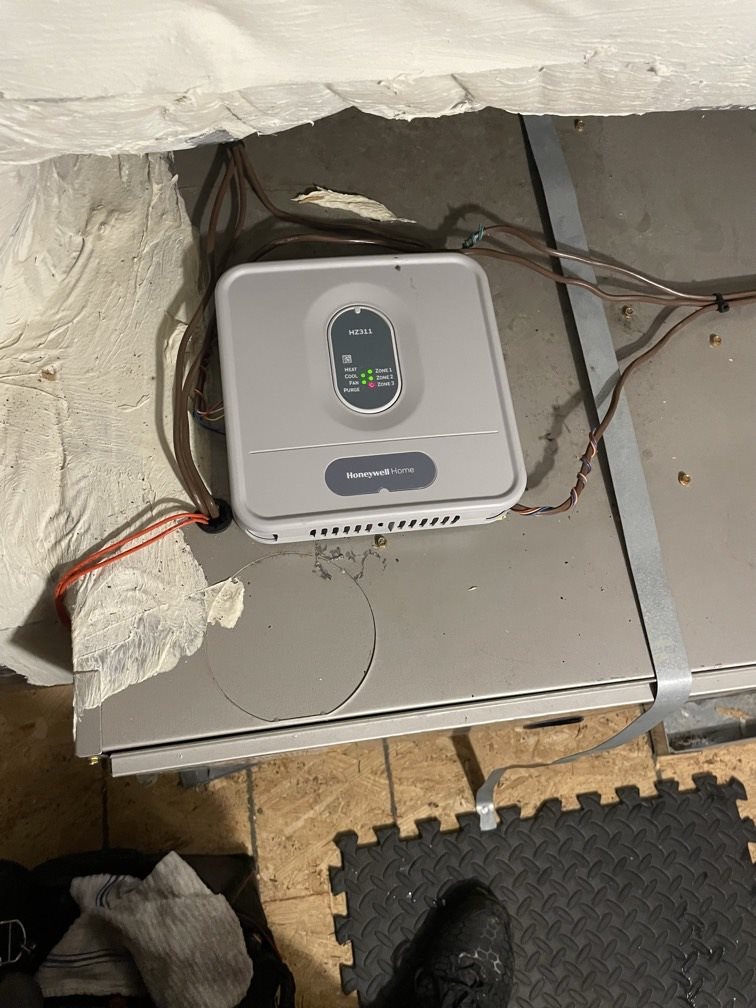 A thermostat set to 72 degrees should not leave a commercial space stuck at 78. That was the situation when a customer from Summerville, SC called our office for help with an AC system that would not cool properly. We arrived at 3:15 p.m. and began testing the controls, wiring, and equipment operation step by step.
The problem turned out to be more than a single failed part.
Two control boards were interfering with the system, and the zoned setup required careful troubleshooting to keep cooling available while we prepared the permanent repair.
Finding the First Failure in the Zoned System
We found proper voltage at the zone control board, but the board was not functioning correctly. This board coordinates thermostat calls and damper positions so each zone receives cooling when needed.
To get the system running, we bypassed the failed zone board. That temporary step revealed a second fault. The furnace control board was not sending voltage to the blower fan or the condenser, so the equipment still could not operate through its normal control sequence.
We then wired the fan and condenser directly to the thermostat. This temporary configuration restored interim cooling until both defective boards could be replaced.
The cooling temperature spread was limited during bypass operation.
All zones remained open, the bypass stayed open, and reduced air velocity affected performance. Still, the system was cooling instead of sitting idle, which mattered for a commercial property in Summerville during summer heat.
The National Weather Service maintains seasonal heat guidance for the South Carolina Lowcountry, where dependable cooling supports safe, usable indoor spaces.
Installing New Controls and Restoring Both Zones
We returned on July 15, 2026, checked in, and removed the defective zone control board. We mounted the replacement board directly to the furnace cabinet with self-tapping screws, then disconnected the thermostat wiring from the temporary bypass and completed the proper connections to the new board.
After restoring power, we found that the existing furnace board still would not send a signal to the blower relay. We replaced that board as well, completed the wiring, and powered the system again.
This time, the controls responded as designed.
Both zones cooled, both thermostats communicated properly, and the dampers operated with each zone. We also confirmed that the unit already had two transformers installed, an appropriate feature for this zoned configuration.
A Complete Commercial AC Repair in Summerville
The customer was extremely satisfied with the completed work. For us, the result came from staying methodical. Had we stopped after finding the first defective board, the repair would have remained incomplete. Testing after each step exposed the second failure and let us correct the full control problem.
At Arctic Air Inc., we provide commercial air conditioning service for businesses across Summerville and the Charleston area, including repairs, replacements, and preventive maintenance.
If your Summerville business has uneven temperatures, unresponsive zones, or an AC system that cannot reach its thermostat setting, schedule a diagnostic visit with our team. Prompt testing can help reduce downtime, uncover connected control problems, and restore dependable cooling before indoor temperatures climb further.
Water was collecting above the ceiling, tiles were filling up, and drips were reaching multiple areas of a Moncks Corner commercial space. The call sounded like an air conditioner leak. Once we arrived, our inspection showed that the source was an airflow imbalance affecting the building.
Replacing wet tiles would have left the underlying condition untouched. We needed to learn why moisture was forming above the kitchen, dining room, and office areas, then correct the airflow conditions behind it.
Following the Water to an Air Pressure Problem
On July 13, 2026, we checked in at the Moncks Corner property and inspected the space above the ceiling. Water had been dripping from ductwork in both the kitchen and dining room.
The makeup-air unit was running, but the grates inside the exhaust hood were heavily clogged. In plain terms, the exhaust system was pulling more air from the building than the makeup-air system could deliver through those blocked grates. That created negative pressure.
Under negative pressure, humid air was drawn into the store through available gaps. When that moisture met the cold duct surfaces, the ducts began to sweat. Condensation collected above the ceiling, soaked tiles, and produced the dripping that prompted the service call.
We determined that the clogged grates needed to be cut out and replaced, then prepared a quote for the corrective work.
Restoring Airflow and Checking the Full System
We returned on July 18, removed the old hood grates, and discarded them. After vacuuming the accumulated dirt from the grate area, we installed new grates and restored power to the makeup-air unit.
Airflow into the hood improved noticeably, but we kept testing. The building remained slightly under negative pressure, so we inspected both air conditioning units and found air escaping around their horizontal supply discharge panels. Stripped screws were preventing the panels from sealing properly.
We replaced the screws and secured the panels.
A flow of cool air at the gap around the nearly closed roof hatch then indicated positive pressure inside the building. That change was expected to improve comfort and stop condensation above the ceiling.
We also confirmed that the makeup-air damper above the ceiling was fully open. During that inspection, we found two supply diffusers with loose fiberglass backing that had not been taped to the diffusers.
Cold air was leaking into the ceiling space at those points. We documented the condition as a remaining repair item, especially if the kitchen continued to feel uncomfortable.
A Satisfied Client and a Clear Next Step
Our customer was satisfied with the completed work. More importantly, we addressed the pressure condition driving the condensation instead of treating the damaged ceiling tiles as the whole problem.
For Moncks Corner business owners and property managers, wet ceiling tiles, dripping ductwork, or uneven kitchen comfort can signal a broader ventilation issue. Arctic Air Inc. provides commercial air conditioning repair for systems serving local businesses.
Call us to schedule an on-site evaluation in Moncks Corner. Acting early can help limit additional ceiling damage and give us a chance to identify airflow leaks before they disrupt staff, customers, or daily operations.
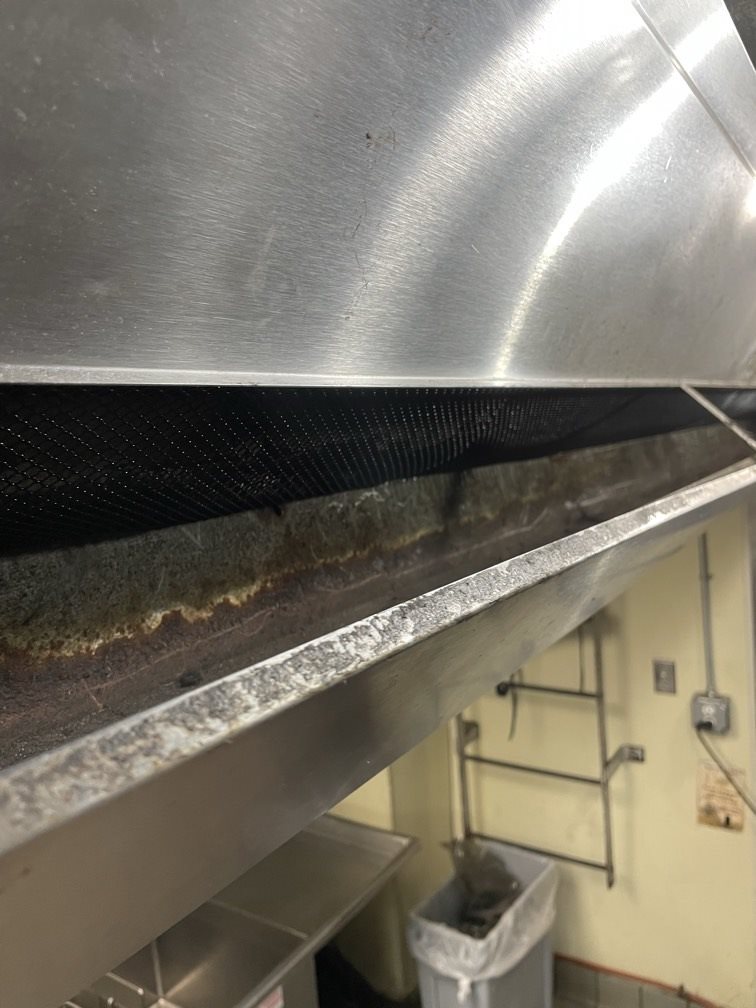
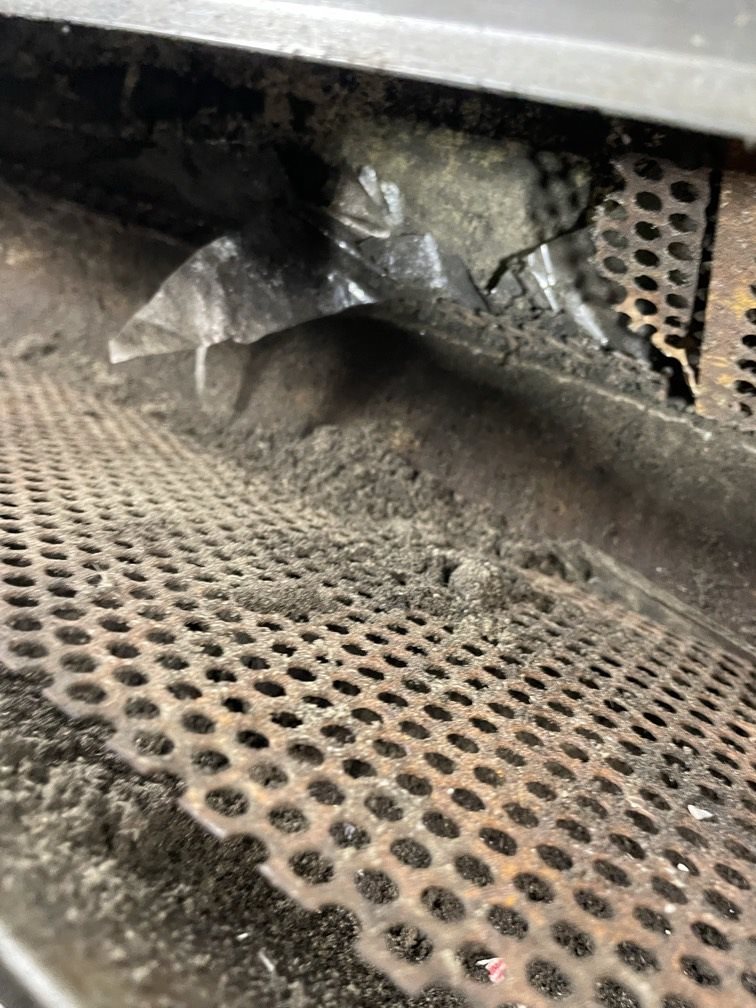
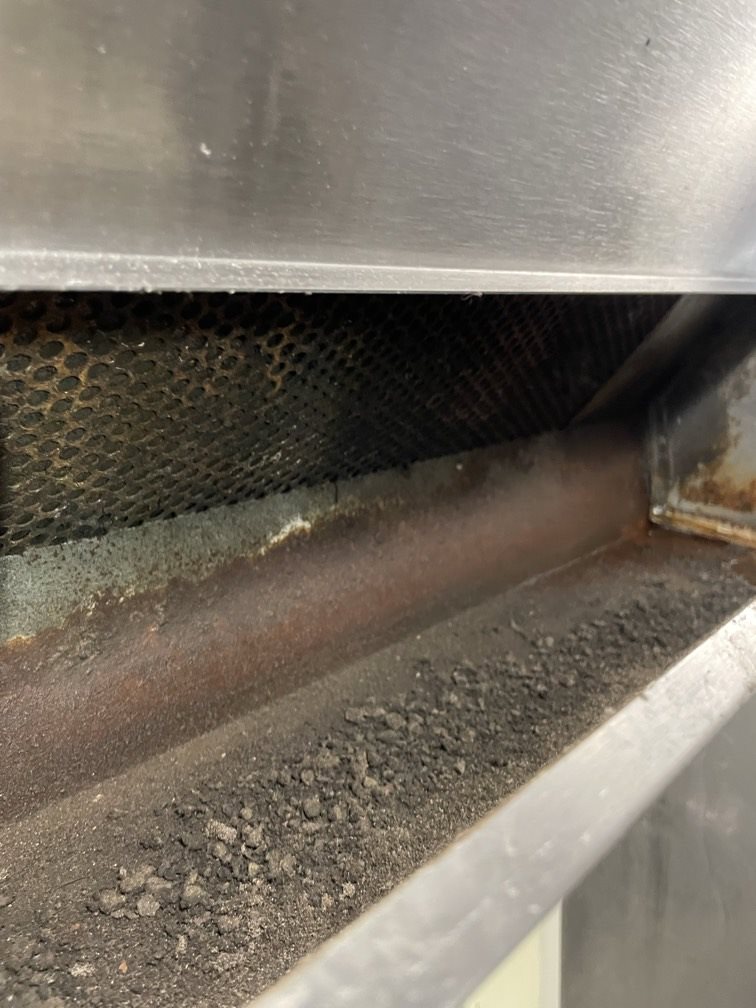
Water was leaking heavily from the walk-in cooler near the fans, but the visible leak was only the first sign of a larger drainage problem. When the customer contacted our office at Arctic Air Inc., we went to the North Charleston, SC, location to trace the source and restore normal drainage before the situation caused more disruption.
What we found connected the cooler leak, a failed heater, a burst freezer drain line, and significant ice buildup. It was a good example of how one clogged line can spread trouble across connected refrigeration equipment.
Finding the Cause Behind the Cooler Leak
We arrived on July 1 and inspected the Trenton walk-in cooler. The cooler drain line was clogged, so we cleared it with nitrogen and flushed it with hot water. That process confirmed the cooler could drain normally again.
Then we looked deeper.
The cooler and freezer drains emptied into the same copper pipe. While the shared line was blocked, water from the cooler backed into the freezer drain. The freezer drain heater had failed, allowing the backed-up water to freeze.
As the ice expanded, it burst the drain line inside the freezer and contributed to heavy ice on the shelving and floor.
Coordinating the Repair With Store Operations
The damaged freezer line and heater needed replacement, but the freezer also had to be empty and powered down so we could remove the ice and complete the repair. That made scheduling part of the plan.
We returned on July 10, but a freezer delivery prevented the work from moving forward. After speaking with Jeremy, we arranged a 6 a.m. return the next morning. That early visit gave us access to the equipment while limiting interference with the store’s daily activity.
Rebuilding and Protecting the Drain Line
On July 11, we disconnected and removed the damaged freezer drain line. We measured and soldered new hard copper pipe from the freezer outlet to the cooler drain connection.
We wrapped the new drain with heater cable, secured the cable, and connected power. Next, we added pipe insulation and secured it with foam tape and duct tape. Two brackets gave the drain added support.
During the work, we also found that the freezer suction line lacked insulation.
We insulated that line to help prevent future ice buildup. We sealed box penetrations with expanding foam, removed debris, dried the floor, restored freezer power, and confirmed the temperature was dropping. The client was satisfied with the completed repair.
Why Regular Refrigeration Service Matters
This project shows why routine commercial refrigeration service matters. A restricted drain or failed heater can begin as a manageable maintenance item, then lead to standing water, ice accumulation, damaged piping, and lost access to refrigerated storage.
Our commercial refrigeration service and maintenance covers coolers, freezers, tanks, and related equipment across the Charleston area. Regular inspections can help identify slow drainage, heater problems, missing insulation, and other warning signs before they grow into larger repairs.
Schedule Commercial Freezer Service in North Charleston
If your North Charleston walk-in cooler is leaking, icing up, or draining slowly, request a service visit from our crew. Call to schedule an inspection before a small drainage issue affects your storage access or business operations.
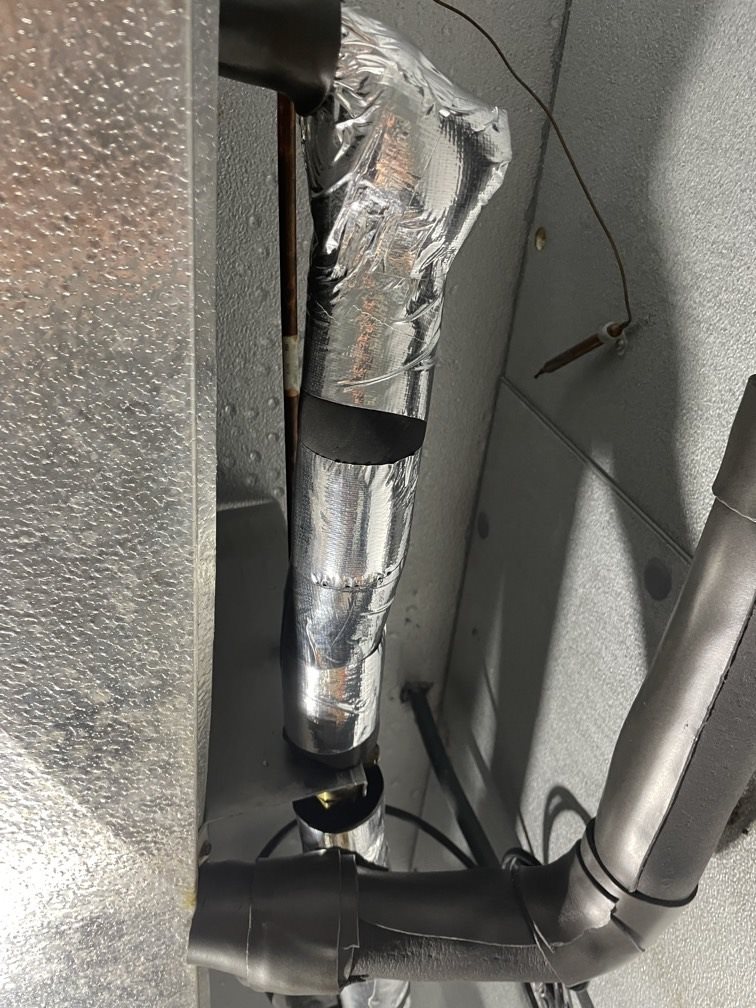
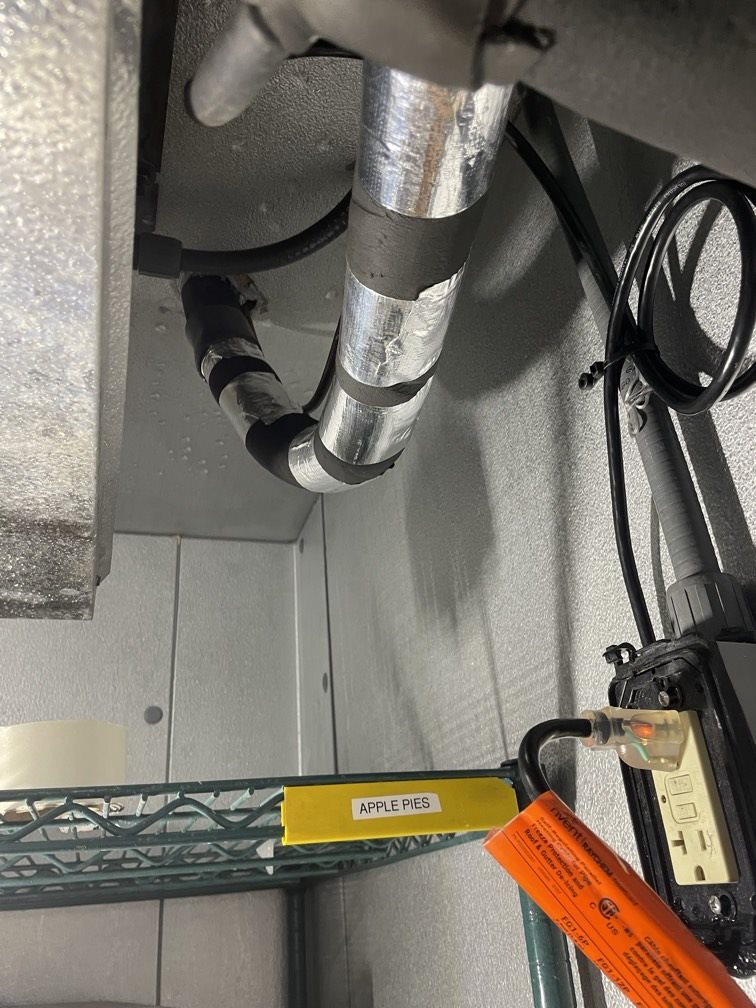
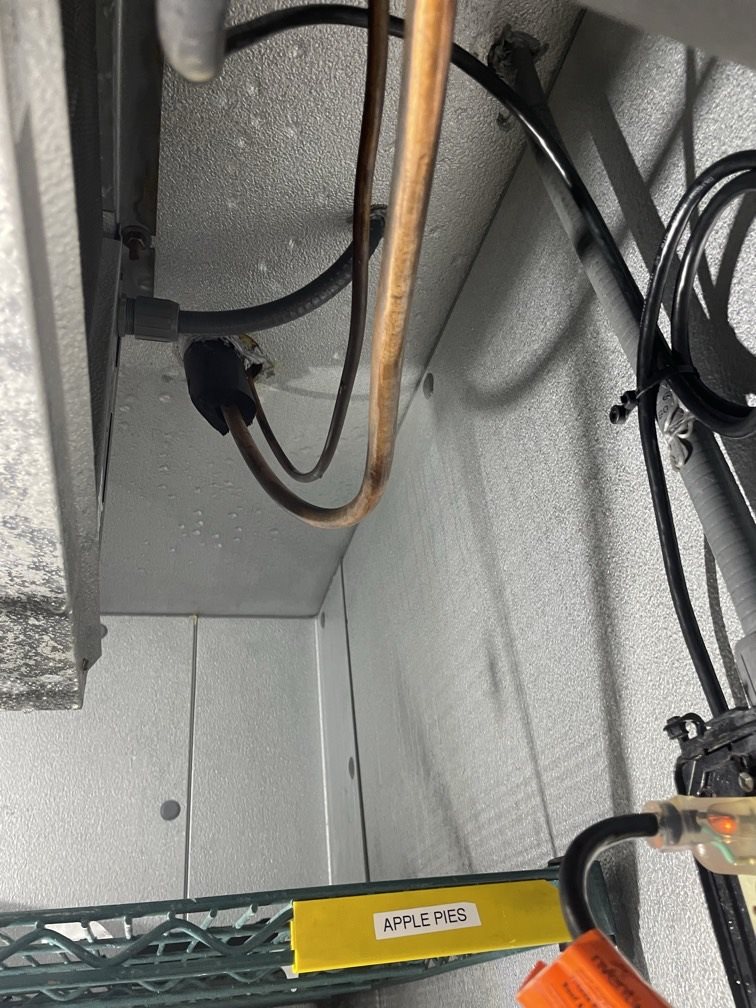
A silent walk-in cooler can create a loud problem for a Charleston business. When this customer called our office, the unit was no longer cooling after a power outage and surge the day before. We arrived at 10:30 a.m. ready to trace the failure, protect the equipment, and find a reliable path back to steady cooling.
Commercial refrigeration repair is a core part of our work at Arctic Air Inc. We serve Charleston and the surrounding Lowcountry with cooler, freezer, tanks, ice machine, and HVACR service for local businesses.
Starting With the Electrical Damage
The customer had already noticed a burned wire coming from the compressor.
That visible damage gave us an important starting point, but we did not assume it was the only issue. We replaced the capacitor, then tested the compressor and its plug to confirm they were not shorted to ground.
That step mattered. We needed to rule out deeper electrical damage before asking the walk-in cooler to carry a full cooling load again.
Once the capacitor was replaced, the system still would not run normally.
It was stuck in a high-pressure lockout, a safety condition that stops operation when the controls detect excessive pressure. We temporarily bypassed the pressure switch for diagnostic purposes and confirmed that the switch was the problem.
Watching the Temperature Fall
After we removed the failed switch from the circuit, the unit began dropping temperature by 10 degrees every 10 minutes. That was a strong cooling rate and showed that the compressor and refrigeration system could pull the box temperature down once the faulty control was isolated.
We then went to the supply house to obtain the specific pressure switch required for the unit. After returning to the Charleston site, we installed the correct replacement rather than leaving a temporary bypass in place.
Planning the Follow-Through
Pressure switch removal and replacement can affect the refrigerant charge, so we recommended watching the cooler through the weekend to confirm that it continued reaching its target temperature. If the system needed more refrigerant, the customer already had a factory-sealed jug of R-404A available for the next service step.
That recommendation gave the customer a practical way to track performance without claiming the system needed refrigerant before the operating data proved it. The cooler was pulling down at a good rate when we completed the repair, and the customer was satisfied with the work provided.
For local restaurants, retailers, and facility managers, a walk-in cooler failure can quickly disrupt normal operations. Our commercial refrigeration team handles repairs, inspections, and preventive service across the Charleston area, with emergency help available when cooling equipment cannot wait.
Schedule Walk-In Cooler Service in Charleston
Submit a service request to schedule a walk-in cooler diagnostic visit in Charleston, SC. Acting when temperatures first begin to rise can help limit downtime and give our team more options for a focused repair.
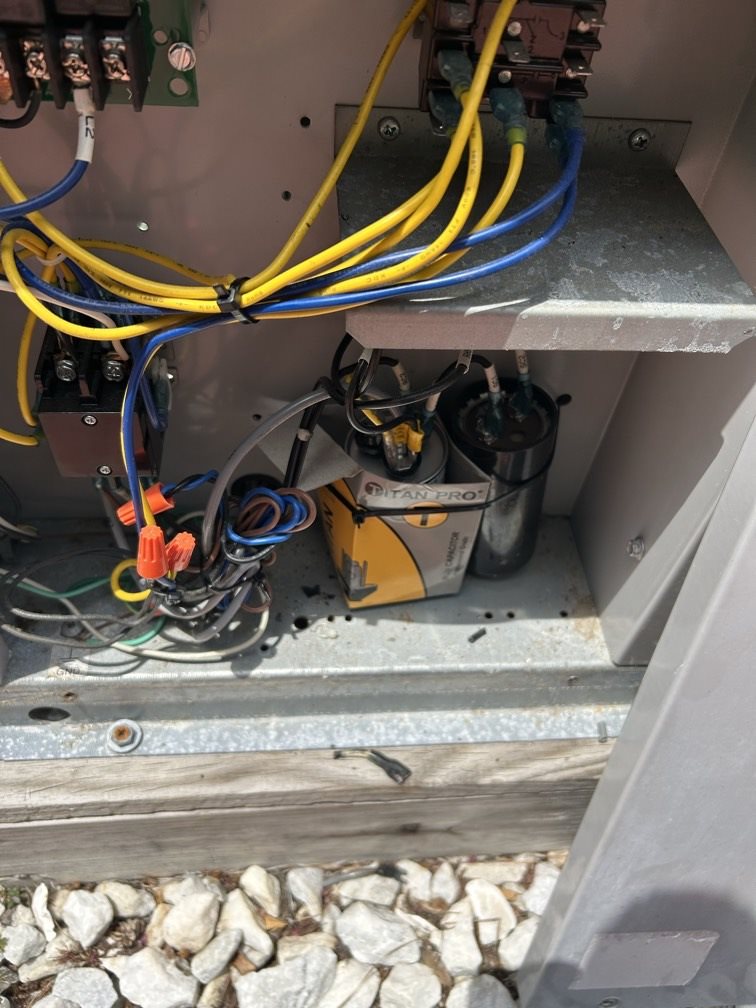
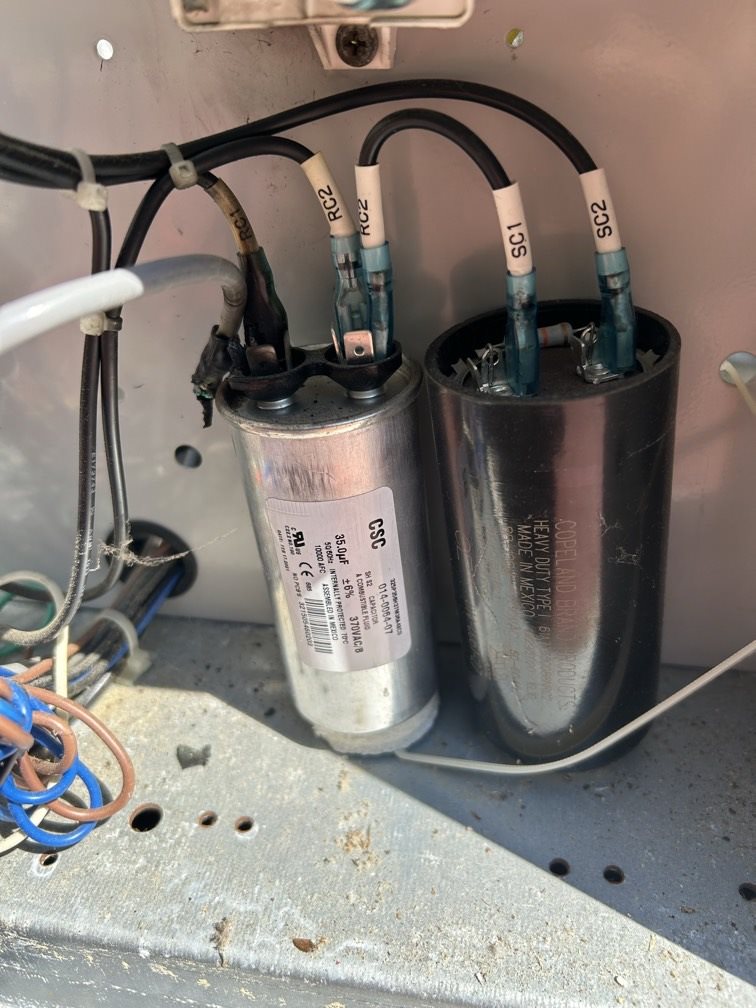
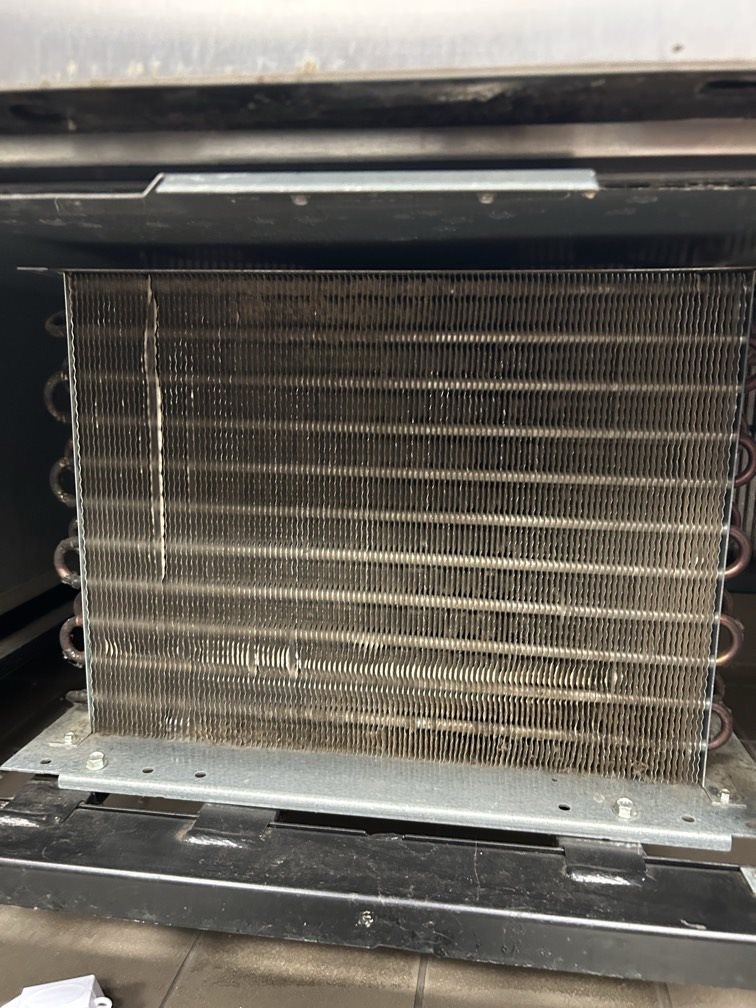
“The freezer has been acting funky.”
That concern brought our Arctic Air Inc. team to a Summerville, SC, commercial property for a closer look at the refrigeration equipment. The customer had called our office and asked us to inspect the fridge, freezer, and sandwich station. Everything was still running, but the freezer’s recent behavior raised a fair question: did the equipment need service before a larger issue developed?
We arrived at 2:00 p.m. and began with an inspection of the three-door freezer and the other requested equipment. Our goal was straightforward.
We needed to verify current performance, identify maintenance needs, and give the customer a clear recommendation based on what we found.
A Concern Worth Checking Before It Became Downtime
Commercial refrigeration can appear operational while dirt and drainage problems build out of sight. During our inspection, we found that the condenser coils needed maintenance. The project photos showed visible dust and debris spread across the coil area, along with buildup around nearby components.
At the time of inspection, both systems were meeting their operating demands. That mattered, but it did not erase the maintenance need in front of us. We explained the recommended cleaning and provided a price for the work.
Once the customer approved it, we moved ahead during the same visit.
Cleaning the Coils and Clearing the Lines
We maintained both systems by cleaning the condenser coils and removing the accumulated debris. This addressed the condition documented during our inspection and left the coil areas visibly cleaner.
Next, we vacuumed the drain lines to clear the existing clogs. Rather than treating the freezer concern as a single symptom, we worked through the maintenance items found during the visit. That approach gave the customer a practical answer and helped leave the equipment in verified operating condition.
There was no dramatic shutdown scene here.
Frankly, that was good news.
The customer called while the equipment was still working, and we had the opportunity to inspect, recommend, clean, clear, and test without a reported loss of operation.
Confirmed Performance for a Summerville Business
After completing the coil cleaning and drain-line work, we checked system operation.
Both systems were performing to manufacturer specifications at that time. The customer was satisfied with the work performed and received a clear result from the original service request.
For local business owners and property managers, this project shows the value of acting when equipment starts behaving differently, even when it has not stopped running. Our commercial refrigeration work covers service, repair, and preventive maintenance for Summerville-area businesses.
Schedule Commercial Freezer Service in Summerville, SC
When a freezer, tank, refrigerator, or sandwich station starts acting differently, schedule an inspection before the concern disrupts daily operations. Call to request a commercial refrigeration visit in Summerville, and get a clear recommendation based on the condition of your equipment.