 In Summerville, a busy day can turn into a staffing problem fast when the building won’t cool down. Between the I-26 growth corridor, nonstop summer humidity, and spaces that run from warehouse bays to storefronts, commercial comfort has to be planned, not hoped for.
This guide gives you a reliability-first way to manage commercial cooling without guesswork. You’ll walk away with a clear plan for what to measure, what to fix first, and how to schedule work around tenants, customers, and operating hours.
Key Takeaways
- A reliable commercial cooling plan starts with how your space operates, not just the thermostat setting.
- Baseline measurements turn vague comfort complaints into actionable, repeatable fixes.
- In the Lowcountry, drainage, airflow, and coil condition are frequent root causes of summer downtime.
- The fastest projects are the ones planned around access, approvals, and tenant communication.
The Reliability-First Plan for Commercial Air Conditioning
Summerville’s heat load ramps up early and stays high, especially in high-traffic buildings near Dorchester Road and the Nexton area. The plan starts by defining what “working” means for your space, so every next step supports uptime.
Comfort, Ventilation, and Operational Requirements
Start with how the building is actually used, not what the thermostat says.
A restaurant near Hutchinson Square needs different airflow and humidity control than a medical office suite or a light industrial space off US-78, and those differences affect sizing, zoning, and run time.
We like to begin with a quick walkthrough with your point person so we understand hot spots, after-hours needs, and any areas that cannot go down, like server closets or prep lines.
Establish a Baseline With Measurable System Data
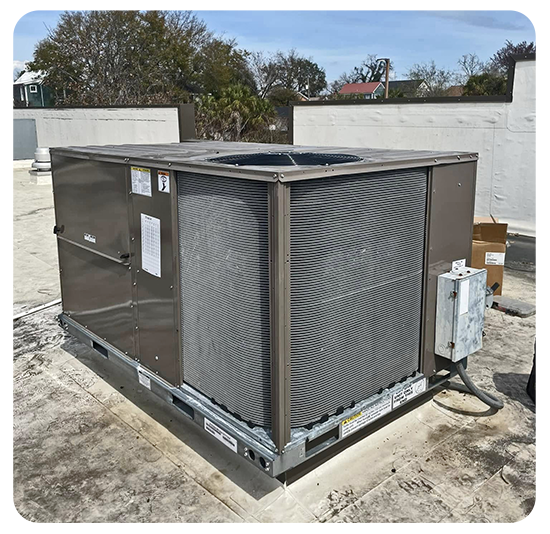
Before you change parts, capture what the system is doing on a normal day, especially for rooftop units common on strip centers around Azalea Square.
Things like supply and return temperatures, airflow indicators, electrical readings, and drain performance help separate “it feels warm” from a repeatable diagnosis that holds up across shifts.
When we service commercial systems, we document the readings and the conditions we found so you can spot trends before they become shutdowns.
Address the Failures That Coastal Humidity Accelerates
Lowcountry humidity is hard on equipment and finishes, and it shows up first as water issues and airflow restrictions.
Clogged condensate drains, algae buildup, rusted pans, and dirty coils can lead to ceiling stains in tenant suites, slick floors in back hallways, and rooms that feel clammy even when the temperature looks fine.
In places like Cane Bay and Sangaree, where summer run time is relentless, keeping drains clear, coils clean, and filtration appropriate is often the difference between steady cooling and a midweek emergency.
Reduce Peak-Season Downtime With Targeted Maintenance Timing
If you wait until the first heat advisory, you’re scheduling in the longest line of the year.
For many properties along the Dorchester Road and Ladson corridors, a spring tune-up before consistent 90-degree days helps catch weak capacitors, worn belts, loose electrical connections, and airflow problems while the building can tolerate brief downtime.
After major storm threats, it also helps to check rooftop units for debris, shifted panels, and drainage issues that can show up after heavy rain and wind.
Make Repair, Retrofit, or Replacement Decisions With Lifecycle Math
When performance drops, the best move depends on more than the repair ticket.
If your building near I-26 is seeing rising energy use, repeated comfort complaints, or the same component failures coming back, it may be time to compare repair costs against the operating cost of keeping an older unit running through another summer.
Replacement and retrofit estimates vary based on unit tonnage, curb and ductwork changes, crane access, controls integration, and electrical scope, so the smart approach is to price the full path, not just the immediate fix.
Scheduling, Access, and Approvals That Keep Projects on Track
Commercial cooling work in Summerville often succeeds or fails on coordination, especially in multi-tenant spaces and older buildings closer to downtown. A little prep up front removes delays once technicians are on site and keeps tenants from being surprised mid-day.
Information That Speeds up Diagnosis on the First Visit
Gather the basics that are hardest to chase when everyone is busy.
Unit locations, model and serial info, the areas affected, when the issue happens, and who can grant access are especially important for properties spread between Summerville, Goose Creek, and North Charleston.
If you have past service notes or a recent list of comfort complaints by suite, it helps narrow the problem to airflow, controls, drainage, or refrigeration before anyone climbs a ladder.
Roof, Mechanical Room, and Safety Access Planning
Rooftop and back-of-house access can add more time than the repair itself.
Confirm roof hatch or ladder locations, escort requirements, parking and loading constraints, and any areas where tenant deliveries or fire lanes must stay clear, which is common near busier retail pads and shared lots.
For larger replacements, approvals and permitting requirements can vary by jurisdiction, so planning early helps avoid stalled schedules once equipment is ordered.
Tenant Communication and Contingency Cooling
Even a well-planned repair can change the feel of a space for a few hours.
Set expectations with tenants about time windows, noise, and which zones might be affected, especially for childcare, medical, and food-service spaces, where comfort and indoor air quality are tied to business operations.
When uptime is critical, having a contingency plan for temporary cooling or phased work keeps you from choosing between customer experience and getting the system fixed correctly.
Plan Your Next Commercial Air Conditioning Move With Arctic Air Inc.
Arctic Air Inc. supports businesses across Summerville and the greater Charleston area with commercial air conditioning service, repairs, and installations.
If you’re trying to stabilize comfort complaints, build a maintenance rhythm, or sort out a repair-versus-replacement decision, reach out to our team. We can help you map the next step based on what your building needs.
We also work with commercial refrigeration and ice machines, which makes it easier to coordinate temperature-critical equipment under one roof.
Frequently Asked Questions
How often should commercial air conditioning be serviced?
Most businesses do best with preventive service twice a year, with a cooling-focused visit before peak summer and another check ahead of the heating season. High-traffic buildings, kitchens, and spaces with long operating hours often need more frequent filter and drain attention. If your site is near heavy pollen or construction activity, inspections may need to be closer together.
How long do commercial rooftop units usually last?
Many rooftop units land in a broad 15–20 year range, but lifespan depends on maintenance, runtime, and environment. In humid coastal climates, corrosion, drainage issues, and constant summer demand can shorten that window. Consistent maintenance and correct airflow are two of the biggest factors that extend useful life.
Why does a commercial AC system freeze up in the summer?
Freeze-ups commonly trace back to restricted airflow, dirty coils, or issues that reduce the system’s ability to absorb heat. Low refrigerant from a leak can also cause conditions that lead to icing, and it usually gets worse the longer it runs. Turning the system off may thaw it, but the underlying cause still needs to be corrected to prevent repeat damage.
Can one contractor handle both cooling and refrigeration for a facility?
Yes, and it can simplify scheduling and reduce downtime when your building relies on both systems. Coordinating the work matters in restaurants, convenience retail, and mixed-use facilities where comfort and cold storage are both business-critical. The key is aligning service windows so neither system is left vulnerable during the hottest weeks.